Chronologie du développement de SPUR

L'idée à l'origine de SPUR date de 2015, lorsque Kevin Dolgin, l’un des trois cofondateurs d’Observia, a cherché en vain un outil qui prendrait en compte la grande diversité et complexité des comportements des patients atteints de maladie chroniques, et qui mesurerait le risque de non-observance. Cela l’a amené à réaliser une revue complète de la littérature, en couvrant non seulement le domaine médical, mais également les domaines de la psychologie et de l'économie comportementale. Il a ainsi conçu un nouveau modèle théorique permettant de mieux comprendre le comportement de santé des patients chroniques.

Observia a suivi la ligne directrice de ce nouveau modèle pour développer une première version de SPUR, outil de diagnostic comportemental testé dans de nombreux programmes de soutien patients entre 2017 et 2020.

Cliquez-ici pour en savoir plus sur Observia : l’entreprise qui développe SPUR

En parallèle, Kevin Dolgin et un conseil d'experts se sont lancés dans un vaste programme de R&D pour affiner l'outil existant et valider scientifiquement une deuxième version de SPUR, avec le soutien financier et administratif d'Observia et de partenaires pour l'analyse des données. L’équipe a analysé et adapté plus de 100 questionnaires de santé existants pour créer un questionnaire comportant 45 points. Cinquante patients ont testé ce questionnaire, en trois langues et dans quatre pays. L'équipe a ensuite reformulé les questions pour plus de clarté et de cohérence, avant que plus de 1000 patients atteints de diabète de type 2 ne testent le questionnaire dans le cadre de trois études menées aux États-Unis, en France et au Royaume-Uni.

Sur les 45 items issus des études psychométriques initiales, tous ont été utilisés dans diverses études par la suite, ce qui a conduit au développement d'un outil dynamique comportant de 6 à 24 questions. Dans un premier protocole de recherche au Royaume-Uni, Joshua Wells a trouvé 27 items (en utilisant l'analyse factorielle) qui étaient statistiquement significatifs. Plus tard, des études utilisant des méthodes statistiques avancées, à savoir la modélisation de Rasch, ont réduit ce nombre à 24 items. Dans tous les cas d'études d'items pour SPUR, les quatre dimensions primordiales et les 13 moteurs sont fondamentalement les mêmes. Par conséquent, nous constatons que la modélisation de Rasch a ajouté une sophistication supplémentaire et a prouvé les mêmes mesures sous-jacentes que les calculs antérieurs, moins raffinés.

L’équipe a ainsi abouti à une version de SPUR qui compte 24 questions basées sur la R&D. L'analyse des données collectées a permis de valider le pouvoir prédictif de SPUR et sa capacité à identifier les leviers comportementaux des patients. La nouvelle version du questionnaire SPUR s’adapte aux réponses du patient, proposant soit 6 questions, soit un volet plus détaillé allant jusqu’à 24 questions. Trois articles de recherche ont été publiés ou sont en cours d'examen sur la base de ces données. 

Voir les publications ici.

Conseil d'experts

SPUR est le fruit de la collaboration d'experts du monde entier qui, par leur expertise et leurs efforts, ont concouru à la construction de cet outil. En 2018, nous avons constitué un conseil d'experts dans les domaines des sciences comportementales appliquées à la santé et de la transformation numérique. Ils nous ont aidés à asseoir les fondements de nos innovations sur des théories validées et à évaluer nos outils en situation réelle.

  • John Piette - Professeur au département Health Behavior - Health Education et co-directeur du Center for Managing Chronic Disease, Université du Michigan (USA)
  • Marie-Eve Laporte - Professeure associée en Sciences du Management, Paris IAE, Université Paris 1 Panthéon-Sorbonne (France)
  • Lydiane Nabec - Professeure en Sciences du Management, Université Paris-Sud / Paris-Saclay (France)
  • Reem Kayyali - Professeure de Pharmacie Clinique et Appliquée - Directrice du Pharmacy Department, Université de Kingston (UK)
  • Helen Mosnier Pudar – Médecin endocrinologue et diabétologue, Hôpital Cochin, AP-HP (France)
  • Gérard Reach - Professeur Emérite de l'Université Paris 13 - Département Qualité et Droits des Patients, CHU Paris Seine-Saint-Denis, AP-HP (France). Spécialiste de l'Education Thérapeutique du Patient
Publications validant SPUR - Accès gratuit

Citation and link to original article

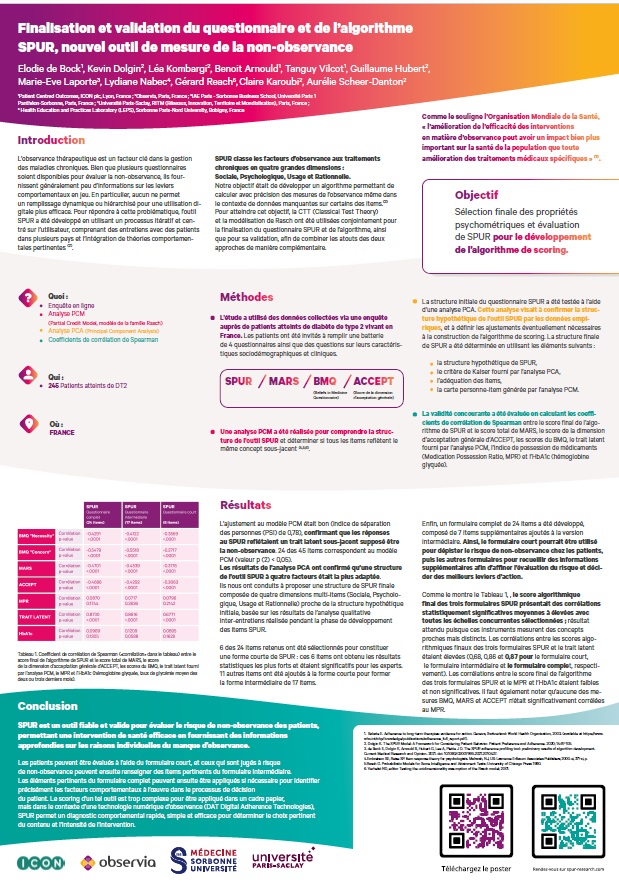
  • de Bock E, Dolgin K, Kombargi L, Arnould B, Vilcot T, Hubert G, Laporte ME, Nabec L, Reach G. Finalization and Validation of Questionnaire and Algorithm of SPUR, a New Adherence Profiling Tool. Patient Prefer Adherence. 2022;16:1213-1231
    https://doi.org/10.2147/PPA.S354705

Purpose: The SPUR (Social, Psychological, Usage and Rational) Adherence Profiling Tool is a recently developed adaptive instrument for assessing key patient-level drivers for non-adherence. This study describes the SPUR questionnaire’s finalization and psychometric evaluation.

Patients and Methods: Data were collected through an online survey among patients with type 2 diabetes included by general practitioners and diabetologists in France. The survey included four questionnaires, SPUR and three validated adherence measures: BMQ, MARS and ACCEPT. Item-level analysis and a partial credit model (PCM) were performed to refine the response option coding of SPUR items. The final item selection of SPUR was defined using a PCM and a principal component analysis (PCA). Construct validity, concurrent validity and known-groups validity were assessed on the final SPUR questionnaire.

Results: A total of 245 patients (55% men, mean age of 63 years) completed the survey remotely and were included in this analysis. Refining response option coding allowed a better discrimination of patients on the latent trait. After item selection, a short, an intermediate, and a long form composed the final SPUR questionnaire. The short form will be used to screen patients for risk and then the other forms will allow the collection of further information to refine the risk assessment and decide the best levers for action. Results obtained were supportive of the construct validity of the forms. Their concurrent validity was demonstrated: moderate to high significant correlations were obtained with BMQ, MARS and ACCEPT scores. Their known-groups validity were shown with a logical pattern of higher scores obtained for patients considered non-adherent and significant differences between the scores obtained for patients considered adherent versus non-adherent.

Conclusion: SPUR is a valid tool to evaluate the risk of non-adherence of patients, allowing effective intervention by providing insights into the respective individual reasons for lack of adherence.

Télécharger le poster SPUR Validation - Phase 2 France (en Français)Vignette_SPUR_poster_phase_2_FR

Nous traitons ces données uniquement à votre demande. Nous hébergeons les données en interne. Nous ne les partagerons pas. Ces informations seront utilisées pour vous envoyer des informations de la part de l'équipe de l'auteur, et vous ne serez abonné à aucune newsletter ou autre communication de marketing. Nous conservons les données pour une durée maximale de 3 ans sur des serveurs sécurisés. Vous pouvez nous envoyer une demande d'accès à vos données, demander leur suppression ou correction, ou restreindre notre traitement de vos données. Vous avez le droit de déposer une plainte concernant la façon dont nous traitons vos données auprès de l'autorité française de protection des données CNIL, ou vous pouvez contacter notre délégué à la protection des données à l'adresse Cette adresse e-mail est protégée contre les robots spammeurs. Vous devez activer le JavaScript pour la visualiser. pour plus d'informations ou en cas de problème. Veuillez consulter notre politique de confidentialité.


Citation and link to original article

  • Wells JSEl Husseini AOkoh S, et al. SPUR: psychometric properties of a patient-reported outcome measure of medication adherence in type 2 diabetes. 

Introduction: Poor medication adherence is associated with worsening patient health outcomes and increasing healthcare costs. A holistic tool to assess both medication adherence and drivers of adherence behaviour has yet to be developed. This study aimed to examine SPUR, a multifactorial patient-reported outcome measure of medication adherence in patients living with type 2 diabetes, with a view to develop a suitable model for psychometric analysis.

Furthermore, the study aimed to explore the relationship between the SPUR model and socio-clinical factors of medication adherence.

Research design and methods: The study recruited 378 adult patients living with type 2 diabetes from a mix of community and secondary-care settings to participate in this non-interventional cross-sectional study. The original SPUR-45 tool was completed by participants with other patient-reported outcome measures for comparison, in addition to the collection of two objective adherence measures; HbA1c and the medication possession ratio (MPR).

Results: Factor and reliability analysis conducted on SPUR-45 produced a revised and more concise version (27-items) of the tool, SPUR-27, which was psychometrically assessed. SPUR-27 observed strong internal consistency with significant correlations to the other psychometric measures (Beliefs about Medication Questionnaire, Diabetes Treatment Satisfaction Questionnaire, Medicine Adherence Rating Scale) completed by participants. Higher SPUR-27 scores were associated with lower HbA1c values and a higher MPR, as well as other predicted socio-clinical factors such as higher income, increased age and lower body mass index.

Conclusions: SPUR-27 demonstrated strong psychometric properties. Further work should look to examine the test–retest reliability of the model as well as examine transferability to other chronic conditions and broader population samples. Overall, the initial findings suggest that SPUR-27 is a reliable model for the multifactorial assessment of medication adherence among patients living with type 2 diabetes.


Citation and link to original article

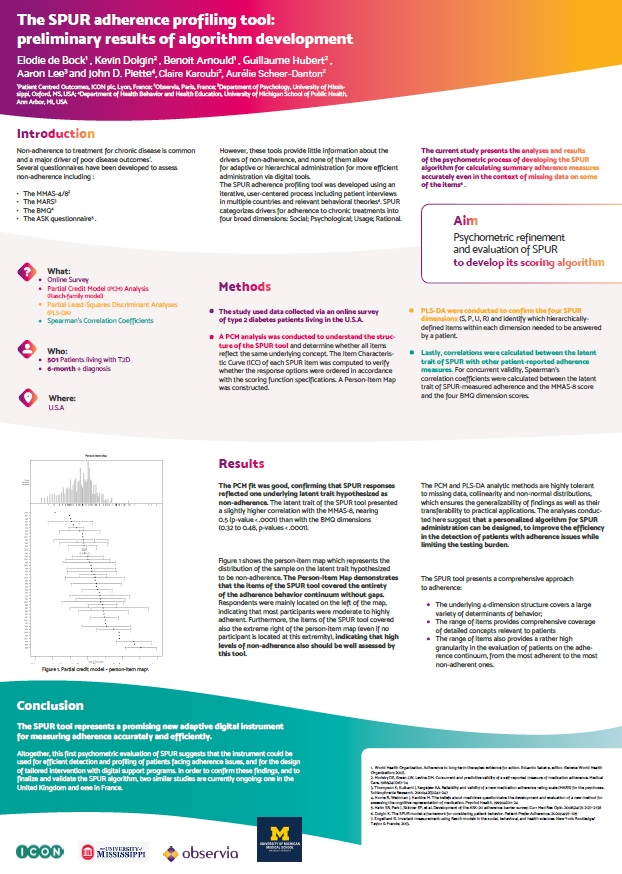
  • Elodie de Bock, Kevin Dolgin, Benoit Arnould, Guillaume Hubert, Aaron Lee & John D. Piette (2022). The SPUR adherence profiling tool: preliminary results of algorithm development, Current Medical Research and Opinion, 38:2, 171-179, DOI: 10.1080/03007995.2021.2010437

Objective: The SPUR (Social, Psychological, Usage, and Rational) Adherence Profiling Tool is a recently developed adaptive instrument for measuring key patient-level risk factors for adherence problems. This study describes the SPUR questionnaire’s psychometric refinement and evaluation.

Methods: Data were collected through an online survey among individuals with type 2 diabetes in the United States. 501 participants completed multiple questionnaires, including SPUR and several validated adherence measures. A Partial Credit Model (PCM) analysis was performed to evaluate the structure of the SPUR tool and verify the assumption of a single underlying latent variable reflecting adherence. Partial least-squares discriminant analyses (PLS-DA) were conducted to identify which hierarchically-defined items within each dimension needed to be answered by a given patient. Lastly, correlations were calculated between the latent trait of SPUR adherence and other patient-reported adherence measures.

Results: Of the 45 candidate SPUR items, 39 proved to fit well to the PCM confirming that SPUR responses reflected one underlying latent trait hypothesized as non-adherence. Correlations between the latent trait of the SPUR tool and other adherence measures were positive, statistically significant, and ranged from 0.32 to 0.48 (p-values < .0001). The person-item map showed that the items reflected well the range of adherence behaviors from perfect adherence to high levels of non-adherence. The PLS-DA results confirmed the relevance of using four meta-items as filters to open or close subsequent items from their corresponding SPUR dimensions.

Conclusions: The SPUR tool represents a promising new adaptive instrument for measuring adherence accurately and efficiently using the digital behavioral diagnostic tool.


Télécharger le poster SPUR Validation - Phase 2 USA (en Anglais)Vignette_SPUR_poster_phase_2_USA

Nous traitons ces données uniquement à votre demande. Nous hébergeons les données en interne. Nous ne les partagerons pas. Ces informations seront utilisées pour vous envoyer des informations de la part de l'équipe de l'auteur, et vous ne serez abonné à aucune newsletter ou autre communication de marketing. Nous conservons les données pour une durée maximale de 3 ans sur des serveurs sécurisés. Vous pouvez nous envoyer une demande d'accès à vos données, demander leur suppression ou correction, ou restreindre notre traitement de vos données. Vous avez le droit de déposer une plainte concernant la façon dont nous traitons vos données auprès de l'autorité française de protection des données CNIL, ou vous pouvez contacter notre délégué à la protection des données à l'adresse Cette adresse e-mail est protégée contre les robots spammeurs. Vous devez activer le JavaScript pour la visualiser. pour plus d'informations ou en cas de problème. Veuillez consulter notre politique de confidentialité.


Citation and link to original article

  • J Wells, A El-Husseini, A Jaffar, K Dolgin, G Hubert, R Kayyali, A cross-sectional study to evaluate the validity of a novel patient-reported outcome measure of medication adherence in Type 2 Diabetes, International Journal of Pharmacy Practice, Volume 29, Issue Supplement_1, April 2021, Page i30, https://doi.org/10.1093/ijpp/riab015.036

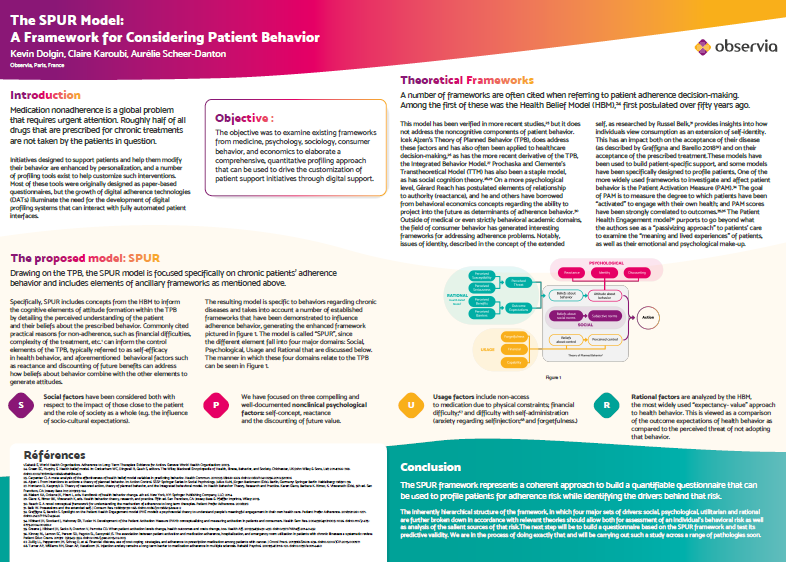
Background: Medication nonadherence is a global problem that requires urgent attention. Roughly half of all drugs that are prescribed for chronic treatments are not taken by the patients in question. Initiatives designed to support patients and help them modify their behavior are enhanced by personalization, and a number of profiling tools exist to help customize such interventions. Most of these tools were originally designed as paper-based questionnaires, but the growth of digital adherence technologies (DATs) illuminate the need for the development of digital profiling systems that can interact with fully automated patient interfaces.
Objective: The objective of this study was to examine existing frameworks from medicine, psychology, sociology, consumer behavior, and economics to elaborate a comprehensive, quantitative profiling approach that can be used to drive the customization of patient support initiatives.
Results: Building primarily on Icek Ajzen’s Theory of Planned Behavior (TPB), the Health Belief Model (HBM) was used to inform the beliefs about behavior posited in the TPB, while incorporating established factors regarding self-efficacy in the “control” elements of the TPB and selected social and psychological factors in the other constituents of the model. The resulting SPUR (Social, Psychological, Usage, Rational) framework represents a holistic, profiling tool with detailed, quantitative outputs that describe a patient’s behavioral risks and the drivers of that risk.
Conclusion: An interactive, digital questionnaire built around SPUR represents a potentially useful tool for those desirous of building interactive digital support programs for patients with chronic diseases.


Citation and link to original article

  • Tugaut, B., Shah, S., Dolgin, K. et al. Development of the SPUR tool: a profiling instrument for patient treatment behavior. J Patient Rep Outcomes 6, 61 (2022). https://doi.org/10.1186/s41687-022-00470-x 

Background: Long-term treatment adherence is a worldwide concern, with nonadherence resulting from a complex interplay of behaviors and health beliefs. Determining an individual’s risk of nonadherence and identifying the drivers of that risk are crucial for the development of successful interventions for improving adherence. Here, we describe the development of a new tool assessing a comprehensive set of characteristics predictive of patients’ treatment adherence based on the Social, Psychological, Usage and Rational (SPUR) adherence framework. Concepts from existing self-reporting tools of adherence-related behaviors were identified following a targeted MEDLINE literature review and a subset of these concepts were then selected for inclusion in the new tool. SPUR tool items, simultaneously generated in US English and in French, were tested iteratively through two rounds of cognitive interviews with US and French patients taking long-term treatments for chronic diseases. The pilot SPUR tool, resulting from the qualitative analysis of patients’ responses, was then adapted to other cultural settings (China and the UK) and subjected to further rounds of cognitive testing.

Results: The literature review identified 27 relevant instruments, from which 49 concepts were included in the SPUR tool (Social: 6, Psychological: 13, Usage: 11, Rational: 19). Feedback from US and French patients suffering from diabetes, multiple sclerosis, or breast cancer (n = 14 for the first round; n = 16 for the second round) indicated that the SPUR tool was well accepted and consistently understood. Minor modifications were implemented, resulting in the retention of 45 items (Social: 5, Psychological: 14, Usage: 10, Rational: 16). Results from the cognitive interviews conducted in China (15 patients per round suffering from diabetes, breast cancer or chronic obstructive pulmonary disease) and the UK (15 patients suffering from diabetes) confirmed the validity of the tool content, with no notable differences being identified across countries or chronic conditions.

Conclusion: Our qualitative analyses indicated that the pilot SPUR tool is a promising model that may help clinicians and health systems to predict patient treatment behavior. Further steps using quantitative methods are needed to confirm its predictive validity and other psychometric properties.


Citation and link to original article

Background: Medication nonadherence is a global problem that requires urgent attention. Roughly half of all drugs that are prescribed for chronic treatments are not taken by the patients in question. Initiatives designed to support patients and help them modify their behavior are enhanced by personalization, and a number of profiling tools exist to help customize such interventions. Most of these tools were originally designed as paper-based questionnaires, but the growth of digital adherence technologies (DATs) illuminate the need for the development of digital profiling systems that can interact with fully automated patient interfaces.

Objective: The objective of this study was to examine existing frameworks from medicine, psychology, sociology, consumer behavior, and economics to elaborate a comprehensive, quantitative profiling approach that can be used to drive the customization of patient support initiatives.

Results: Building primarily on Icek Ajzen’s Theory of Planned Behavior (TPB), the Health Belief Model (HBM) was used to inform the beliefs about behavior posited in the TPB, while incorporating established factors regarding self-efficacy in the “control” elements of the TPB and selected social and psychological factors in the other constituents of the model. The resulting SPUR (Social, Psychological, Usage, Rational) framework represents a holistic, profiling tool with detailed, quantitative outputs that describe a patient’s behavioral risks and the drivers of that risk.

Conclusion: An interactive, digital questionnaire built around SPUR represents a potentially useful tool for those desirous of building interactive digital support programs for patients with chronic diseases.

Télécharger le poster SPUR Validation - Phase 0 (en Anglais)Vignette_SPUR_poster_phase_0

Nous traitons ces données uniquement à votre demande. Nous hébergeons les données en interne. Nous ne les partagerons pas. Ces informations seront utilisées pour vous envoyer des informations de la part de l'équipe de l'auteur, et vous ne serez abonné à aucune newsletter ou autre communication de marketing. Nous conservons les données pour une durée maximale de 3 ans sur des serveurs sécurisés. Vous pouvez nous envoyer une demande d'accès à vos données, demander leur suppression ou correction, ou restreindre notre traitement de vos données. Vous avez le droit de déposer une plainte concernant la façon dont nous traitons vos données auprès de l'autorité française de protection des données CNIL, ou vous pouvez contacter notre délégué à la protection des données à l'adresse Cette adresse e-mail est protégée contre les robots spammeurs. Vous devez activer le JavaScript pour la visualiser. pour plus d'informations ou en cas de problème. Veuillez consulter notre politique de confidentialité.


Citation and link to original article

  • de Bock E, Dolgin K, Kombargi L, Arnould B, Vilcot T, Hubert G, Laporte ME, Nabec L, Reach G. Finalization and Validation of Questionnaire and Algorithm of SPUR, a New Adherence Profiling Tool. Patient Prefer Adherence. 2022;16:1213-1231
    https://doi.org/10.2147/PPA.S354705

Purpose: The SPUR (Social, Psychological, Usage and Rational) Adherence Profiling Tool is a recently developed adaptive instrument for assessing key patient-level drivers for non-adherence. This study describes the SPUR questionnaire’s finalization and psychometric evaluation.

Patients and Methods: Data were collected through an online survey among patients with type 2 diabetes included by general practitioners and diabetologists in France. The survey included four questionnaires, SPUR and three validated adherence measures: BMQ, MARS and ACCEPT. Item-level analysis and a partial credit model (PCM) were performed to refine the response option coding of SPUR items. The final item selection of SPUR was defined using a PCM and a principal component analysis (PCA). Construct validity, concurrent validity and known-groups validity were assessed on the final SPUR questionnaire.

Results: A total of 245 patients (55% men, mean age of 63 years) completed the survey remotely and were included in this analysis. Refining response option coding allowed a better discrimination of patients on the latent trait. After item selection, a short, an intermediate, and a long form composed the final SPUR questionnaire. The short form will be used to screen patients for risk and then the other forms will allow the collection of further information to refine the risk assessment and decide the best levers for action. Results obtained were supportive of the construct validity of the forms. Their concurrent validity was demonstrated: moderate to high significant correlations were obtained with BMQ, MARS and ACCEPT scores. Their known-groups validity were shown with a logical pattern of higher scores obtained for patients considered non-adherent and significant differences between the scores obtained for patients considered adherent versus non-adherent.

Conclusion: SPUR is a valid tool to evaluate the risk of non-adherence of patients, allowing effective intervention by providing insights into the respective individual reasons for lack of adherence.

Télécharger le poster SPUR Validation - Phase 2 France (en Français)Vignette_SPUR_poster_phase_2_FR

Nous traitons ces données uniquement à votre demande. Nous hébergeons les données en interne. Nous ne les partagerons pas. Ces informations seront utilisées pour vous envoyer des informations de la part de l'équipe de l'auteur, et vous ne serez abonné à aucune newsletter ou autre communication de marketing. Nous conservons les données pour une durée maximale de 3 ans sur des serveurs sécurisés. Vous pouvez nous envoyer une demande d'accès à vos données, demander leur suppression ou correction, ou restreindre notre traitement de vos données. Vous avez le droit de déposer une plainte concernant la façon dont nous traitons vos données auprès de l'autorité française de protection des données CNIL, ou vous pouvez contacter notre délégué à la protection des données à l'adresse Cette adresse e-mail est protégée contre les robots spammeurs. Vous devez activer le JavaScript pour la visualiser. pour plus d'informations ou en cas de problème. Veuillez consulter notre politique de confidentialité.


Citation and link to original article

  • Wells JSEl Husseini AOkoh S, et al. SPUR: psychometric properties of a patient-reported outcome measure of medication adherence in type 2 diabetes. 

Introduction: Poor medication adherence is associated with worsening patient health outcomes and increasing healthcare costs. A holistic tool to assess both medication adherence and drivers of adherence behaviour has yet to be developed. This study aimed to examine SPUR, a multifactorial patient-reported outcome measure of medication adherence in patients living with type 2 diabetes, with a view to develop a suitable model for psychometric analysis.

Furthermore, the study aimed to explore the relationship between the SPUR model and socio-clinical factors of medication adherence.

Research design and methods: The study recruited 378 adult patients living with type 2 diabetes from a mix of community and secondary-care settings to participate in this non-interventional cross-sectional study. The original SPUR-45 tool was completed by participants with other patient-reported outcome measures for comparison, in addition to the collection of two objective adherence measures; HbA1c and the medication possession ratio (MPR).

Results: Factor and reliability analysis conducted on SPUR-45 produced a revised and more concise version (27-items) of the tool, SPUR-27, which was psychometrically assessed. SPUR-27 observed strong internal consistency with significant correlations to the other psychometric measures (Beliefs about Medication Questionnaire, Diabetes Treatment Satisfaction Questionnaire, Medicine Adherence Rating Scale) completed by participants. Higher SPUR-27 scores were associated with lower HbA1c values and a higher MPR, as well as other predicted socio-clinical factors such as higher income, increased age and lower body mass index.

Conclusions: SPUR-27 demonstrated strong psychometric properties. Further work should look to examine the test–retest reliability of the model as well as examine transferability to other chronic conditions and broader population samples. Overall, the initial findings suggest that SPUR-27 is a reliable model for the multifactorial assessment of medication adherence among patients living with type 2 diabetes.


Citation and link to original article

  • Elodie de Bock, Kevin Dolgin, Benoit Arnould, Guillaume Hubert, Aaron Lee & John D. Piette (2022). The SPUR adherence profiling tool: preliminary results of algorithm development, Current Medical Research and Opinion, 38:2, 171-179, DOI: 10.1080/03007995.2021.2010437

Objective: The SPUR (Social, Psychological, Usage, and Rational) Adherence Profiling Tool is a recently developed adaptive instrument for measuring key patient-level risk factors for adherence problems. This study describes the SPUR questionnaire’s psychometric refinement and evaluation.

Methods: Data were collected through an online survey among individuals with type 2 diabetes in the United States. 501 participants completed multiple questionnaires, including SPUR and several validated adherence measures. A Partial Credit Model (PCM) analysis was performed to evaluate the structure of the SPUR tool and verify the assumption of a single underlying latent variable reflecting adherence. Partial least-squares discriminant analyses (PLS-DA) were conducted to identify which hierarchically-defined items within each dimension needed to be answered by a given patient. Lastly, correlations were calculated between the latent trait of SPUR adherence and other patient-reported adherence measures.

Results: Of the 45 candidate SPUR items, 39 proved to fit well to the PCM confirming that SPUR responses reflected one underlying latent trait hypothesized as non-adherence. Correlations between the latent trait of the SPUR tool and other adherence measures were positive, statistically significant, and ranged from 0.32 to 0.48 (p-values < .0001). The person-item map showed that the items reflected well the range of adherence behaviors from perfect adherence to high levels of non-adherence. The PLS-DA results confirmed the relevance of using four meta-items as filters to open or close subsequent items from their corresponding SPUR dimensions.

Conclusions: The SPUR tool represents a promising new adaptive instrument for measuring adherence accurately and efficiently using the digital behavioral diagnostic tool.


Télécharger le poster SPUR Validation - Phase 2 USA (en Anglais)Vignette_SPUR_poster_phase_2_USA

Nous traitons ces données uniquement à votre demande. Nous hébergeons les données en interne. Nous ne les partagerons pas. Ces informations seront utilisées pour vous envoyer des informations de la part de l'équipe de l'auteur, et vous ne serez abonné à aucune newsletter ou autre communication de marketing. Nous conservons les données pour une durée maximale de 3 ans sur des serveurs sécurisés. Vous pouvez nous envoyer une demande d'accès à vos données, demander leur suppression ou correction, ou restreindre notre traitement de vos données. Vous avez le droit de déposer une plainte concernant la façon dont nous traitons vos données auprès de l'autorité française de protection des données CNIL, ou vous pouvez contacter notre délégué à la protection des données à l'adresse Cette adresse e-mail est protégée contre les robots spammeurs. Vous devez activer le JavaScript pour la visualiser. pour plus d'informations ou en cas de problème. Veuillez consulter notre politique de confidentialité.


Citation and link to original article

  • J Wells, A El-Husseini, A Jaffar, K Dolgin, G Hubert, R Kayyali, A cross-sectional study to evaluate the validity of a novel patient-reported outcome measure of medication adherence in Type 2 Diabetes, International Journal of Pharmacy Practice, Volume 29, Issue Supplement_1, April 2021, Page i30, https://doi.org/10.1093/ijpp/riab015.036

Background: Medication nonadherence is a global problem that requires urgent attention. Roughly half of all drugs that are prescribed for chronic treatments are not taken by the patients in question. Initiatives designed to support patients and help them modify their behavior are enhanced by personalization, and a number of profiling tools exist to help customize such interventions. Most of these tools were originally designed as paper-based questionnaires, but the growth of digital adherence technologies (DATs) illuminate the need for the development of digital profiling systems that can interact with fully automated patient interfaces.
Objective: The objective of this study was to examine existing frameworks from medicine, psychology, sociology, consumer behavior, and economics to elaborate a comprehensive, quantitative profiling approach that can be used to drive the customization of patient support initiatives.
Results: Building primarily on Icek Ajzen’s Theory of Planned Behavior (TPB), the Health Belief Model (HBM) was used to inform the beliefs about behavior posited in the TPB, while incorporating established factors regarding self-efficacy in the “control” elements of the TPB and selected social and psychological factors in the other constituents of the model. The resulting SPUR (Social, Psychological, Usage, Rational) framework represents a holistic, profiling tool with detailed, quantitative outputs that describe a patient’s behavioral risks and the drivers of that risk.
Conclusion: An interactive, digital questionnaire built around SPUR represents a potentially useful tool for those desirous of building interactive digital support programs for patients with chronic diseases.


Citation and link to original article

  • Tugaut, B., Shah, S., Dolgin, K. et al. Development of the SPUR tool: a profiling instrument for patient treatment behavior. J Patient Rep Outcomes 6, 61 (2022). https://doi.org/10.1186/s41687-022-00470-x 

Background: Long-term treatment adherence is a worldwide concern, with nonadherence resulting from a complex interplay of behaviors and health beliefs. Determining an individual’s risk of nonadherence and identifying the drivers of that risk are crucial for the development of successful interventions for improving adherence. Here, we describe the development of a new tool assessing a comprehensive set of characteristics predictive of patients’ treatment adherence based on the Social, Psychological, Usage and Rational (SPUR) adherence framework. Concepts from existing self-reporting tools of adherence-related behaviors were identified following a targeted MEDLINE literature review and a subset of these concepts were then selected for inclusion in the new tool. SPUR tool items, simultaneously generated in US English and in French, were tested iteratively through two rounds of cognitive interviews with US and French patients taking long-term treatments for chronic diseases. The pilot SPUR tool, resulting from the qualitative analysis of patients’ responses, was then adapted to other cultural settings (China and the UK) and subjected to further rounds of cognitive testing.

Results: The literature review identified 27 relevant instruments, from which 49 concepts were included in the SPUR tool (Social: 6, Psychological: 13, Usage: 11, Rational: 19). Feedback from US and French patients suffering from diabetes, multiple sclerosis, or breast cancer (n = 14 for the first round; n = 16 for the second round) indicated that the SPUR tool was well accepted and consistently understood. Minor modifications were implemented, resulting in the retention of 45 items (Social: 5, Psychological: 14, Usage: 10, Rational: 16). Results from the cognitive interviews conducted in China (15 patients per round suffering from diabetes, breast cancer or chronic obstructive pulmonary disease) and the UK (15 patients suffering from diabetes) confirmed the validity of the tool content, with no notable differences being identified across countries or chronic conditions.

Conclusion: Our qualitative analyses indicated that the pilot SPUR tool is a promising model that may help clinicians and health systems to predict patient treatment behavior. Further steps using quantitative methods are needed to confirm its predictive validity and other psychometric properties.


Citation and link to original article

Background: Medication nonadherence is a global problem that requires urgent attention. Roughly half of all drugs that are prescribed for chronic treatments are not taken by the patients in question. Initiatives designed to support patients and help them modify their behavior are enhanced by personalization, and a number of profiling tools exist to help customize such interventions. Most of these tools were originally designed as paper-based questionnaires, but the growth of digital adherence technologies (DATs) illuminate the need for the development of digital profiling systems that can interact with fully automated patient interfaces.

Objective: The objective of this study was to examine existing frameworks from medicine, psychology, sociology, consumer behavior, and economics to elaborate a comprehensive, quantitative profiling approach that can be used to drive the customization of patient support initiatives.

Results: Building primarily on Icek Ajzen’s Theory of Planned Behavior (TPB), the Health Belief Model (HBM) was used to inform the beliefs about behavior posited in the TPB, while incorporating established factors regarding self-efficacy in the “control” elements of the TPB and selected social and psychological factors in the other constituents of the model. The resulting SPUR (Social, Psychological, Usage, Rational) framework represents a holistic, profiling tool with detailed, quantitative outputs that describe a patient’s behavioral risks and the drivers of that risk.

Conclusion: An interactive, digital questionnaire built around SPUR represents a potentially useful tool for those desirous of building interactive digital support programs for patients with chronic diseases.

Télécharger le poster SPUR Validation - Phase 0 (en Anglais)Vignette_SPUR_poster_phase_0

Nous traitons ces données uniquement à votre demande. Nous hébergeons les données en interne. Nous ne les partagerons pas. Ces informations seront utilisées pour vous envoyer des informations de la part de l'équipe de l'auteur, et vous ne serez abonné à aucune newsletter ou autre communication de marketing. Nous conservons les données pour une durée maximale de 3 ans sur des serveurs sécurisés. Vous pouvez nous envoyer une demande d'accès à vos données, demander leur suppression ou correction, ou restreindre notre traitement de vos données. Vous avez le droit de déposer une plainte concernant la façon dont nous traitons vos données auprès de l'autorité française de protection des données CNIL, ou vous pouvez contacter notre délégué à la protection des données à l'adresse Cette adresse e-mail est protégée contre les robots spammeurs. Vous devez activer le JavaScript pour la visualiser. pour plus d'informations ou en cas de problème. Veuillez consulter notre politique de confidentialité.

Date
Description